
Your Questions, Answered
Whether you're just getting started or looking for more detailed information, you'll find answers to the questions we hear most often. If you can't find the information you're looking for, don't hesitate to get in touch!
General
What is the statutory retirement age in the UK?
State Pension age, or statutory retirement age, in the UK is not the same as retirement age. Retirement age is when you choose to retire and you can still work after you have reached State Pension age.
When you reach State Pension age, the Government gives you a number of options. You can either:
- stop working and get your State Pension
- carry on working and get your State Pension as well
- carry on working and put off claiming your State Pension
If you put off claiming your State Pension, you may be able to get extra State Pension or a lump-sum payment when you do claim it.
What is the basic state pension?
The full State Pension is £230.35 per week. The actual amount you get depends on your National Insurance record.
For those receiving the ‘old basic State Pension’ (i.e. people who reached State Pension age before 6 April 2016), the full rate is £176.45 per week.
The only reasons the amount can be higher are:
- If you have over a certain amount of Additional State Pension
- You defer (delay) taking your State Pension
- You can still get a State Pension if you have other income like a personal pension or a workplace pension.
You might have to pay tax on your State Pension.
How can I calculate my pension entitlement? Do you have a pension calculator?
You have to tell the Department of Work and Pensions that you have retired and that you wish to claim your State Pension.
You can contact the Pensions Service at the Department of Work and Pensions on 08456 060 265 or go to www.direct.gov.uk. You can also find a pension calculator on the website that may help you to calculate your pension entitlement.
What is the difference between a retirement property, a care home and a nursing home?
Retirement developments and apartment complexes are designed for independent people aged 60+ who want to maintain their own lifestyle. Unlike care homes or nursing homes, residents live in their own private apartments and do not receive routine personal or medical care.
Key differences:
- Retirement Living: Independent living in a private apartment, with shared facilities and a like-minded community.
- Care Home: Accommodation with personal care support, meals, and communal facilities for those who need help with daily living.
- Nursing Home: Provides the same support as a care home, plus 24-hour nursing care for people with more complex medical needs.
What age can you buy a retirement home?
At least one of the Residents living in a Churchill apartment must be aged over 60, with the partner being over 55.
Do you have to be retired to buy a retirement property?
No, you can still work, you will just need to meet the age criteria.
What is Retirement Living?
Retirement living is about enhancing your lifestyle. In many ways, living in a retirement apartment is no different from living in any other development. Your home is your own and you can decorate and furnish it as you wish.
The individual apartments are typically one or two bedrooms. They each have their own front door, modern kitchens and shower rooms but with access to landscaped Communal Gardens.
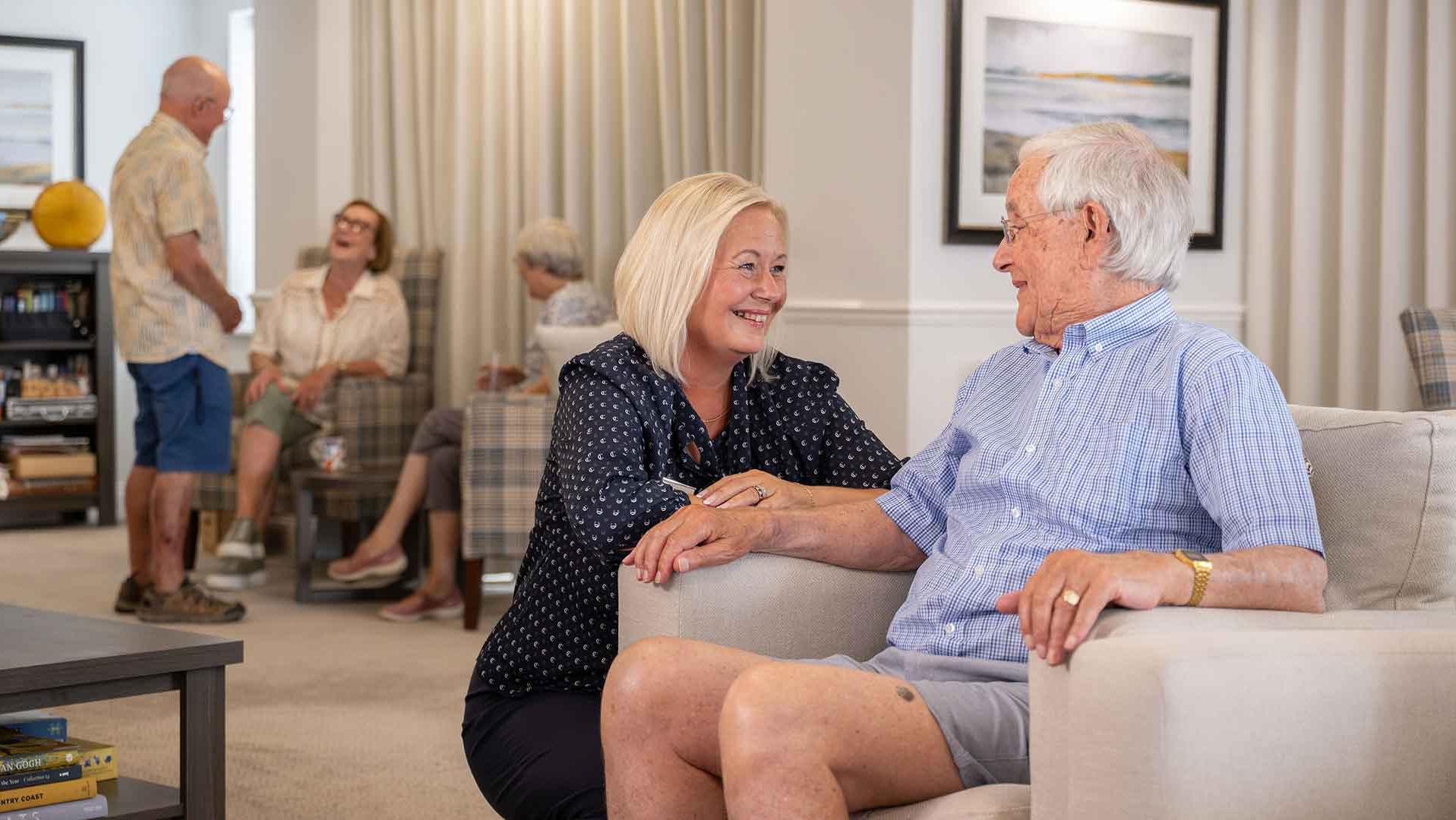
Churchill Living developments also include a Lodge Manager, Residents' Lounge, coffee bar and a lively social calendar. There is a community of like minded people of a similar age and the maintenance is taken care of, so you can relax and enjoy your retirement.
Thinking about moving?
Book a no obligation visit, download a brochure, or speak to our team. However you'd like to explore your options, we're here to help.