

As the cool air of winter falls away, robins, wrens and blackbirds stir, rustling through the brambles and watching from the branches above. They remind us of the secret worlds we rarely see unless we take the time to look.
While the new year brings many changes, some things, we hope, never do. One of them is the sound of spring in the community gardens of your Churchill Living retirement village. Bringing together family, neighbours and friends, our landscaped communal gardens offer a peaceful sanctuary for residents and local wildlife alike.
So, whether you enjoy taking your afternoon coffee outside with the breeze in your hair, or you’re a devoted birdwatcher searching for the rarer species that spring brings to the UK , read on to discover the garden-loving birds you're likely to see this year.
Six UK spring birds to look for in your garden
Blackbirds
As with many bird species, male and female blackbirds look slightly different. In fact, female blackbirds are not black at all, but a dark brown colour with a lighter, speckled breast. The males give the species its name, with jet black feathers contrasted by an orange beak and a yellow ring around the eyes. Blackbirds are one of the most common UK species, so you’ll see them for most of the year. After rainfall, you'll often spot them hopping along the ground and turning leaves as they forage for insects and worms in the grass.
Attracting blackbirds to the garden
Based on their natural diet, bird foods such as mealworms, suet and fat balls work best to tempt blackbirds into the garden. Place food low to the ground, at a similar height to their natural foraging level, and near a bird bath or bowl of water.
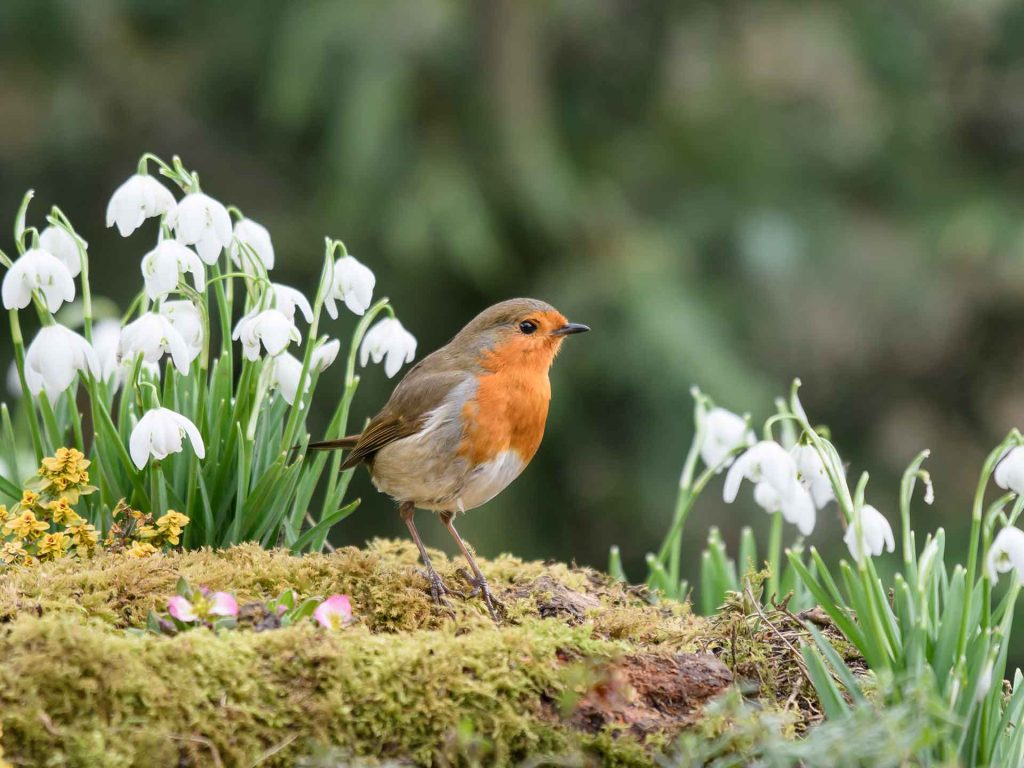
European robin (robin red breast)
It's impossible to list famous UK garden birds without mentioning the robin, whose birdsong you can hear all year round. Curiously, males and females look identical, although younger birds have no red breast. Instead, youngsters are a lighter brown all over, spotted with auburn and golden-brown feathers. Don’t be fooled by their delicate appearance; these hardy birds are bold and highly territorial. They have even been known to follow gardeners to make the most of freshly turned soil and catch the best grub. Increasingly, robins sing at night as well as during the day, with streetlamps giving them the impression that it's time for morning choir service a little too soon.
Attracting robins to the garden
Robins like to sing from a perch, so providing plenty of perch points, whether trees, fences or bird houses, will help draw them in. They mainly eat beetles and worms in the wild, but you can feed them a mixture of mealworms, seeds, suet, crushed peanuts, sunflower hearts and raisins.
Wren
The wren is one of the smallest birds in the UK, measuring around ten centimetres. This little ball of feathers tends to hide away in shrubbery, so if you're sitting on a park bench and hear a rustle and a chirp in the leaves behind you, a wren may have come to visit.
In flight, this small brown bird is easy to recognise, with short, rounded wings and a narrow tail. It has a lighter brown underbelly and delicate bar patterns along its wings. Due to its size, this bird sticks to smaller insects for dinner, such as spiders, ants and caterpillars.
Attracting wrens to the garden
Wrens are foraging birds, so scattering food on the ground or using a low, sheltered bird feeder is more likely to entice them. Seeds, suet and dried mealworms are firm favourites.
Blue tits
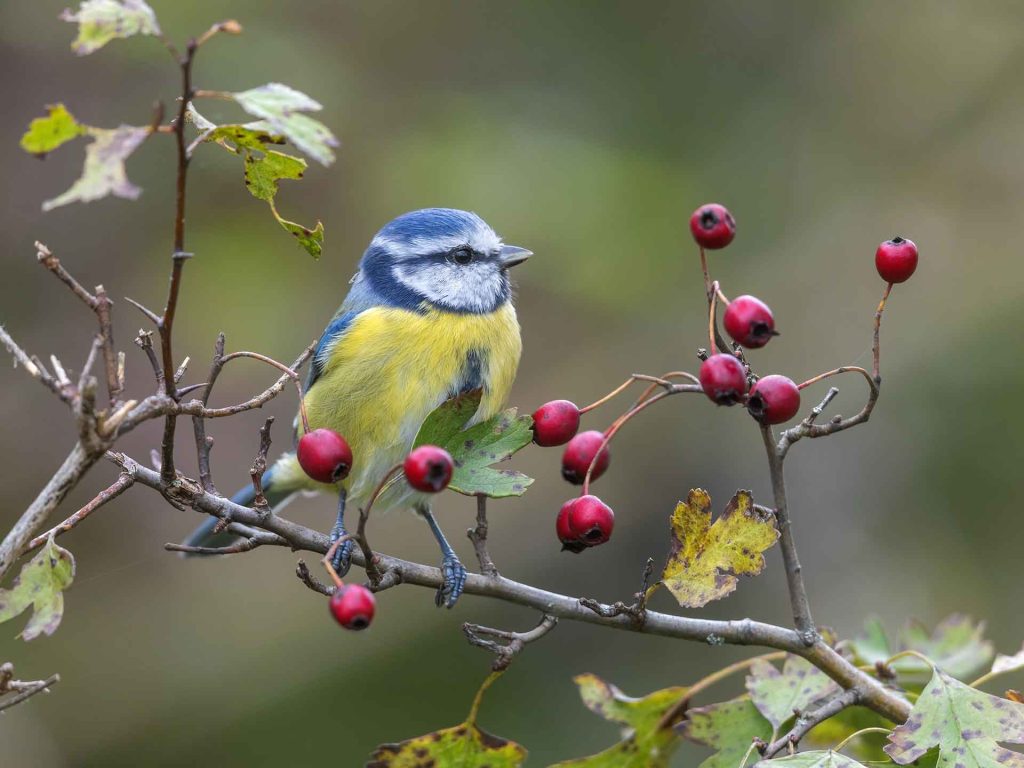
As common UK birds go, blue tits are among the most flamboyant. Adorned with vibrant blue, yellow, white and green feathers, they’re instantly recognisable garden visitors.
These birds are highly social, forming large family groups and gathering with other blue tits to forage. If you attract one to your garden, more will soon follow. It’s not unusual to see four or five of these confident little birds at a feeder, unperturbed by passers-by. They often playfully chase one another across the ground, and time egg laying around the caterpillar season from May to June, typically laying up to a dozen eggs.
Attracting blue tits to your garden
These tiny birds forage in groups and can bring food back to flocks far larger than their immediate family, sometimes numbering nearly 20 birds. High-energy foods such as suet balls and mealworms, as well as berry shrubs in the garden, are a great way to attract them.
Starling
Starlings are easily mistaken for black birds from a distance, but a closer look reveals an oil-like, iridescent band of plumage around the neck, pale underwings and intricate, creamy-yellow speckling across dark feathers in winter.
You may have seen them in a murmuration, bending through the sky in synchronised groups that can number hundreds of thousands. This typically occurs from November to February, when many of the species migrate to the UK from Scandinavia. Starlings flit confidently along the ground and fly with a distinctive quickness and directness that makes them easy to recognise in the air.
Attracting starlings to your garden
These communal birds prefer open feeders or ground trays, allowing them to gather in groups. Offer foods such as peanuts, mealworms, sunflower hearts or suet.
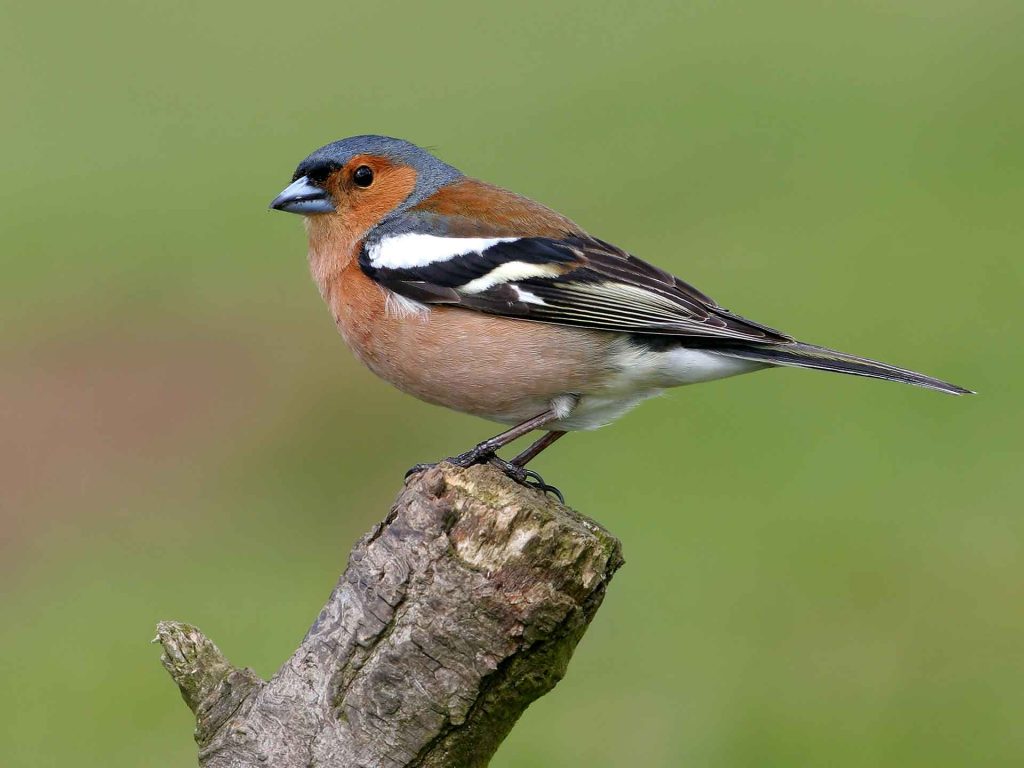
Chaffinch
Male chaffinches are the easiest to spot, with their copper-coloured stomach contrasting a dusty blue cap around their face. Female chaffinches are a little harder to see as their colouring allows them to camouflage easily on the ground. They’re brown all over, except for yellow and white streaking on their wings. You’ll usually hear their bird call long before you spot them in the undergrowth.
Attracting chaffinches to your garden
Because they prefer foraging on the ground and under the safety of bushes, chaffinches are fairly shy of high, open bird feeders and favour small insects or seeds. Offer a mix of sunflower hearts, Niger seeds and crushed peanuts on a ground feeder or bird table rather than a hanging feeder. Alternatively, scatter bird food on the ground.
Churchill Living: bringing nature to you
The communal gardens in our Churchill Retirement Villages are designed to help you spend time outdoors, your way. You’re free to bird-watch, picnic, or put your gardening skills to the test like John and Sheila. Discover the best of retirement community living in our properties across the UK, from the countryside to the city.